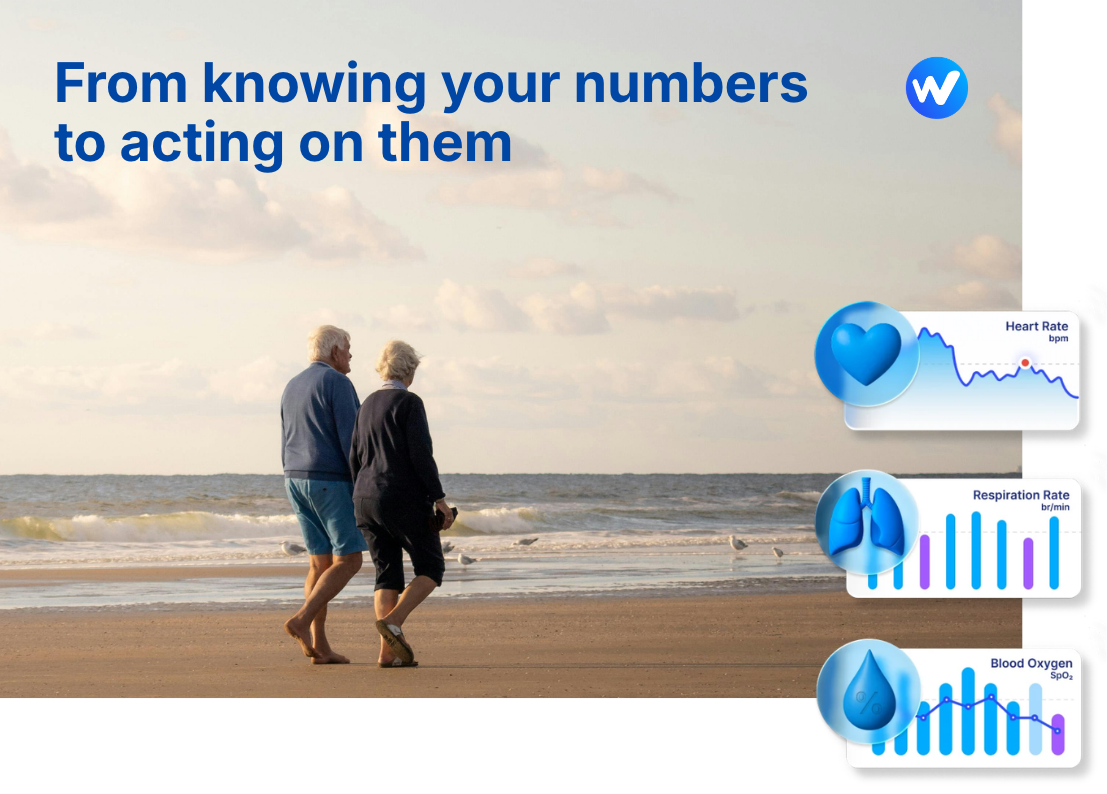
Turning everyday health awareness into meaningful care
Across the UK, millions of people are tracking their health every day. From step counts and heart rate to sleep and activity levels, wearable technology has made personal health data more visible than ever before. What was once the domain of clinicians is now part of everyday life.
This reflects a broader change in how people engage with their own wellbeing. People are becoming more aware of how they feel, how their bodies change over time, and the importance of taking a more active role in their health.
The NHS has played an important role in encouraging this change. Campaigns such as Know Your Numbers have successfully prompted people to take a greater interest in their health, helping millions understand the importance of measures such as blood pressure and the role they can play in identifying potential risks earlier.
The direction of travel across health and care is increasingly focused on prevention, earlier intervention and supporting people in the community before health concerns escalate.
There is now a real opportunity to build on this momentum
While more people than ever are aware of their health data, there is still a gap between awareness and action.
A heart reading can provide useful context, but on its own, it does not always lead to a clear next step. For individuals, it can be difficult to know when a change is clinically significant. For services, it can be challenging to translate fragmented readings into consistent, clinically useful insight.
This is where more structured approaches to monitoring become important.
In clinical settings, vital signs and assessments provide greater context around someone’s condition. Frameworks such as the NHS-validated NEWS2 offer a consistent way to recognise deterioration and support decision-making. When this type of data is available in a structured way, it becomes easier to identify when someone may need additional support and to intervene earlier where appropriate.
The opportunity now is to extend this approach beyond traditional settings.
As care continues to move beyond hospital walls, virtual wards and remote monitoring services are creating new ways to support people in their own homes.
Patients, carers and clinicians can all play a role. Individuals are already more comfortable engaging with their own health information. Carers and community teams can help capture vital signs and assessments closer to where care is delivered. Clinicians can review these observations and make informed decisions.
When these elements come together, insight becomes action
Remote monitoring allows changes in a person’s condition to be identified earlier, often before they become more serious. It enables timely intervention, helps avoid unnecessary hospital admissions and allows more people to remain safely at home. Just as importantly, it creates a shared understanding between individuals, carers and clinicians, strengthening communication and collaboration across the system.

This is not about replacing clinical care. It is about strengthening it with better visibility and earlier insight.
By building on the behaviours people are already adopting and aligning them with clinically recognised frameworks, health and care services can create a more connected, proactive approach to care. One that starts with awareness, but is grounded in structured, actionable insight.
As expectations continue to evolve, the focus will increasingly shift from simply knowing your numbers to understanding what they mean and what to do next.
The future of health and care is unlikely to be defined by how much data we collect, but by how effectively we use it. Turning information into timely action will be essential if we are to deliver more proactive, preventative and connected care across our communities.
At Whzan Digital Health, we support this through simple, scalable remote monitoring that helps carers and clinicians capture clinically useful information, recognise deterioration earlier and deliver more proactive care across virtual wards, community services and care providers.
Please get in touch with the team to find out more.